

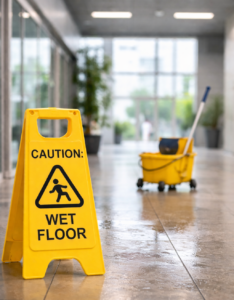
 Falls can happen almost anywhere. A wet floor, broken step, or poor lighting can turn a normal day into a painful accident. When a fall happens on someone else’s property, many people wonder if they have any legal rights. Understanding when a fall may involve negligence can help you decide what steps to take next.
At Skinner Accident & Injury Lawyers, we often speak with people who are unsure if their fall could lead to a claim. Premises liability law helps explain when a property owner may be responsible for an injury.
Not All Falls Are the Same
Not every fall leads to a legal claim. Some accidents simply happen. However, some falls occur because a property owner failed to keep the property reasonably safe.
A slip-and-fall accident is one type of premises liability case. These accidents may happen when dangerous conditions are present, such as:
- Wet or slippery floors
- Broken stairs or loose handrails
- Poor lighting in walkways or stairwells
- Uneven sidewalks or flooring
- Construction areas that are not clearly marked
If a hazard like this caused your fall, it may be worth learning more about your legal options. Our Slip and Fall FAQ page explains many of the questions people have after these accidents.
Property Owners Have a Duty to Keep Areas Safe
Property owners have a duty of care under the law. This means they must take reasonable steps to keep their property safe for visitors.
This may include:
- Inspecting the property regularly
- Fixing known hazards
- Warning visitors about dangerous conditions
If a property owner knows about a hazard and does nothing to fix it or warn people, they may be responsible if someone gets hurt. You can learn more about how these types of cases work by visiting our Personal Injury FAQ page, where we explain common legal questions after an accident.
Why Visitor Status Can Matter
The law also looks at why someone was on the property in the first place.
Customers, clients, and invited guests usually receive the highest level of protection. Property owners are expected to keep areas safe for people who are there for business or social reasons. Trespassers may receive less protection. However, children can sometimes be treated differently. Under the attractive nuisance doctrine, property owners may need to take extra care if their property poses a danger to children, like when there’s a pool or construction equipment.
An Injury Alone Is Not Enough
To bring a successful claim, several things must usually be shown. In many cases, a lawyer must help prove:
- The property owner controlled the area where the fall happened
- A dangerous condition existed
- The owner knew or should have known about the hazard
- The hazard caused the fall
- The injury led to real damages, such as medical bills or lost wages
Every case is different, which is why speaking with a lawyer can be helpful.
Why Documentation Matters
After a fall, documentation can be very important. Evidence can help show what happened and why.
Helpful documentation may include:
- Photos of the hazard or accident scene
- Witness statements
- Medical records
- Incident reports
- Security camera footage
The more information you have, the easier it may be to understand whether negligence played a role in the accident.
Understanding Your Options After a Fall
A fall on someone else’s property can lead to pain, medical bills, and time away from work. If you are unsure whether your accident may involve negligence, it can help to learn more about your legal rights.
Our Slip and Fall Accident page and Personal Injury FAQs provide additional information on how these claims work and the steps people often take after an injury.
Skinner Accident & Injury Lawyers serves clients in West Virginia, Virginia, Maryland, and D.C. If you or someone you love was hurt in a fall, speaking with an experienced personal injury attorney may help you better understand your options and what to do next.