

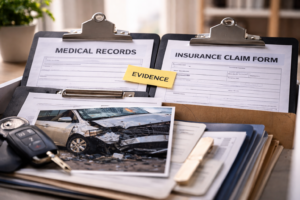
 Hit-and-run accidents can leave people feeling overwhelmed and uncertain. In these crashes, one driver leaves the scene without sharing contact or insurance information. The injured person is often left managing medical care, vehicle damage, and insurance questions without answers from the other driver.
Understanding how hit-and-run cases are typically handled can make the process feel less confusing.
What Makes a Hit-and-Run Accident Different
In most car accidents, drivers exchange information and insurance companies communicate with one another. A hit-and-run crash is different. The at-fault driver leaves, making it more difficult to assign responsibility.
Police are usually called to investigate and prepare an official accident report. This report documents the date, time, location, and any known details about the vehicle that left the scene. For a broader overview of these types of cases, visit our Hit-and-Run Accidents page. You can also learn more about how injury claims work in general by visiting our Car Accident page.
Injuries and Medical Documentation
Hit-and-run crashes can cause a wide range of injuries. Some injuries appear right away. Others may take hours or days to fully develop. Common injuries include neck strain, back injuries, broken bones, and concussions.
Medical documentation often plays a central role in injury claims. Records from doctors, urgent care visits, imaging, and follow-up treatment help connect injuries to the crash. Our FAQ, “Three Reasons Why Getting Medical Care After an Accident Is Crucial,” explains why timely treatment and proper documentation can matter in a claim.
You can also visit our Personal Injury page to better understand how damages may be evaluated.
Evidence That Can Support a Hit-and-Run Claim
Strong documentation can be especially important in hit-and-run cases. Helpful evidence may include:
- Photos of vehicle damage
- Pictures of the accident scene
- Witness names and contact information
- The official police report
In some cases, surveillance cameras from nearby homes or businesses may capture useful footage. Traffic cameras may also provide additional information.
Questions sometimes arise about whether a case has the right elements to move forward. Our FAQ, “Do I Have a Good Case?,” outlines the basic factors that are often reviewed in injury claims.
Insurance and Uninsured Motorist Coverage
When the driver who caused the crash cannot be identified, insurance coverage becomes a primary focus. Many auto insurance policies include uninsured motorist coverage. This coverage may apply in hit-and-run accidents, depending on the policy terms.
Insurance companies review police reports, medical records, and other documentation before making decisions about payment. Policy language can be complex, which is why understanding available coverage is often an important part of the process.
Our Uninsured Motorist Coverage page explains how this type of coverage works and when it may apply.
Understanding Your Legal Options
Every hit-and-run case is different. The extent of injuries, the available evidence, and the insurance coverage all affect how a claim may move forward.
Skinner Accident & Injury Lawyers works with individuals facing the challenges that can follow serious crashes, including hit-and-run accidents. Whether you are in West Virginia, Virginia, Maryland, or Washington, DC, Skinner Accident & Injury Lawyers is here to help. If you have questions about a hit-and-run accident or would like to discuss your legal options, our team is available to speak with you.