

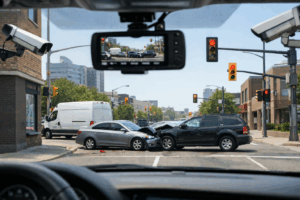
 We live in a world where cameras are everywhere. They are on phones, in stores, in parking lots, and along busy roads. As a result, people capture many accidents on video, even when they don’t expect to.
Video recordings can help show what really happened if you are injured in a car accident, slip-and-fall, or another type of incident.
What Is Video Evidence?
Video evidence is a recording that captures an event as it happens. It may come from a dashcam, a security camera, or a phone. These recordings can help us figure out exactly how an accident occurred and who may be responsible.
How Video Recordings Can Help a Case
After an accident, memories can fade or change. People may also see events differently. Showing the facts through video can help clear things up.
Video recordings may help by:
- Showing how the accident happened
- Confirming where the injury took place
- Supporting your side of the story
- Helping settle disagreements about fault
Video Recordings After Car and Truck Accidents
In car accident cases, video evidence can be especially helpful. Dashcams and nearby security cameras may capture the moments before, during, or after a crash. This can be useful in everyday crashes and also important in a Truck Accident, where the size and force of the vehicles involved can lead to especially serious injuries.
These videos may show:
- A driver running a red light or stop sign
- Unsafe lane changes or speeding
- The point of impact between vehicles
- Road or weather conditions at the time
This kind of evidence can help your legal team, the insurance companies, and the courts better understand what caused the crash. To learn more, visit our Car Accidents page.
Video Recordings in Slip-and-Fall Cases
Slip-and-fall accidents often happen in places with security cameras, such as stores, restaurants, apartment buildings, and parking lots. Video footage from these locations can help explain what led to the fall and what conditions were present at the time.
Video may help show:
- A wet floor or other unsafe condition
- How long the hazard was present
- Whether there were warning signs
- How the fall happened
This kind of footage can help show how well a property owner was maintaining the area. To learn more about these types of cases, visit our Slip and Fall page.
Where Video Evidence Often Comes From
Many cameras may be nearby, which surprises people. Video footage is often deleted quickly, so you must act fast.
Familiar sources of video include:
- Dashcams
- Business security cameras
- Parking lot cameras
- Doorbell cameras facing public areas
- Phone videos from witnesses
Public and Private Spaces
The location of the recording matters when using a video after an accident or injury. Many accidents happen in places like roads, sidewalks, parking lots, and public stores. These areas have cameras to record incidents as part of everyday activity.
Other locations are more private. Places such as bathrooms, locker rooms, and dressing rooms are spaces where people expect privacy. Videos from these areas may raise privacy concerns and generally aren’t treated the same way. This difference means that videos from public spaces are more commonly used when reviewing accidents or injuries. Each situation is unique, and reviewers usually scrutinize recordings closely before relying on them.
Why This Matters
In many accident and injury cases, proof is important. Video recordings can help show what happened and who was responsible. This can be useful in car accidents, slip-and-fall cases, and other injury claims, especially when people disagree about the facts. If you think a camera recorded the incident, it’s smart to act quickly because some videos are deleted after a short time. A lawyer can help take steps to protect that footage before it’s gone.
If you were hurt in an accident and think a video may exist, contact Skinner Accident & Injury Lawyers. We can review what happened, answer your questions, and help you understand whether you may have a case.